What EWC Code Applies to Plasterboard?
Plasterboard from construction falls under EWC code 17 08 02. Here's how to find the right code for your specific waste stream and why the source industry matters.
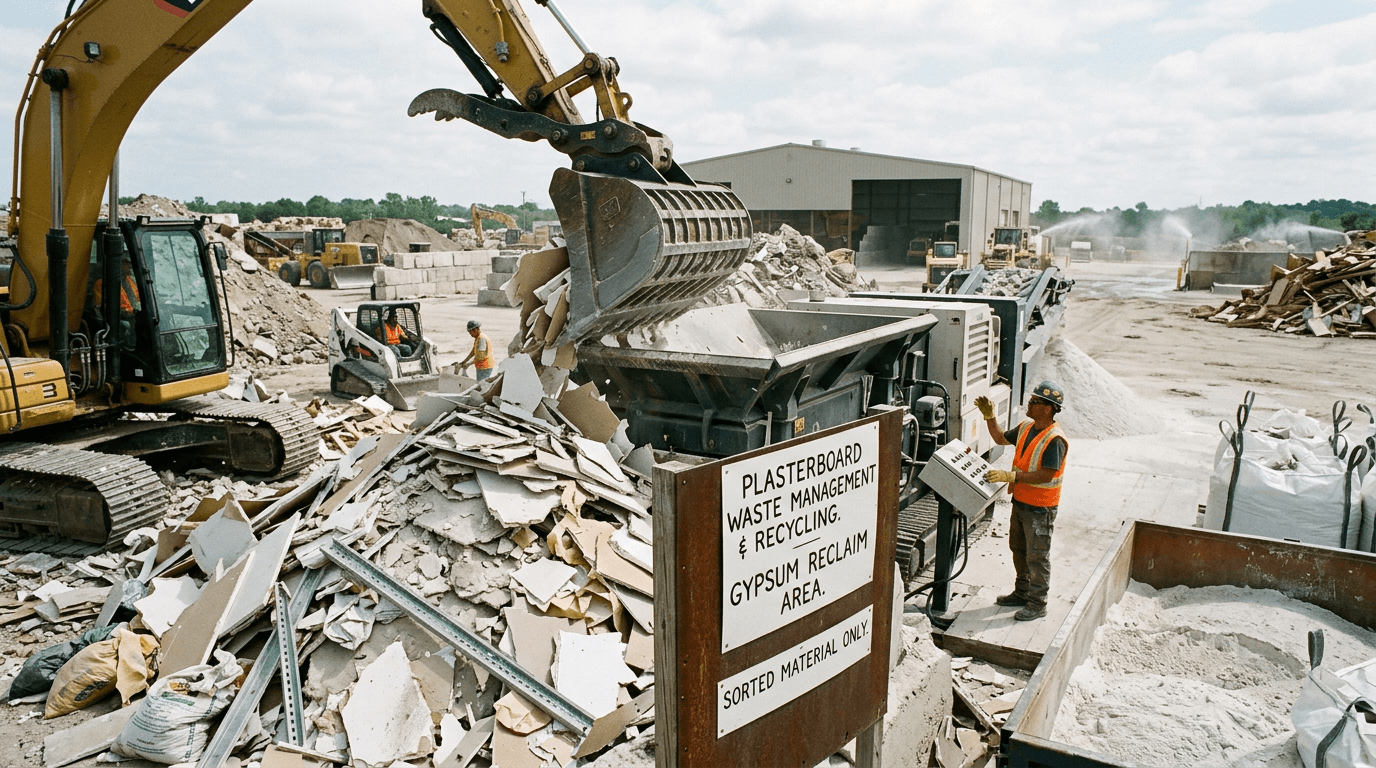
Plasterboard from construction and demolition activities falls under EWC code 17 08 02 (gypsum-based construction materials other than those mentioned in 17 08 01). This applies to non-contaminated plasterboard — offcuts, broken boards, or waste from fit-out and refurbishment work.
Contaminated plasterboard, or plasterboard mixed with hazardous materials, may fall under 17 08 01* — the hazardous mirror entry — where classification depends on the nature and concentration of the contamination.
Why the source industry matters
The same material can map to different EWC codes depending on where it came from. Plasterboard waste from a construction site is chapter 17 (construction and demolition wastes). Plasterboard offcuts from a manufacturing process would fall under chapter 10 or 12 depending on the activity. Getting this wrong means submitting invalid data to DEFRA's waste tracking system.
Hazardous vs non-hazardous
EWC codes marked with an asterisk (*) are hazardous waste. For plasterboard, the key distinction is contamination. Uncontaminated gypsum-based board is non-hazardous (17 08 02). If the board has been in contact with hazardous substances — certain paints, adhesives, or insulation materials — the classification may shift to 17 08 01*.
Hazardous waste requires a consignment note rather than a transfer note, and the carrier must be licensed to handle hazardous materials.
Using AI to classify your specific waste
Waste descriptions are rarely straightforward. The right EWC code depends on the material, the source industry, and any contamination. WasteCheck's /v1/classify-waste endpoint handles this — describe the waste in plain English and get back the correct code with a confidence score and reasoning:
curl -X POST https://api.wastecheck.co.uk/v1/classify-waste \
  -H "Authorization: Bearer wc_live_your_key" \
  -H "Content-Type: application/json" \
  -d '{
    "description": "Broken plasterboard from office refurbishment",
    "source_industry": "construction",
    "additional_context": "Non-contaminated, from internal walls"
  }'
{
  "classifications": [{
    "ewc_code": "17 08 02",
    "description": "Gypsum-based construction materials",
    "chapter": "17 - Construction and demolition wastes",
    "is_hazardous": false,
    "confidence": 0.94,
    "reasoning": "Plasterboard is gypsum-based. Non-contaminated material from construction falls under chapter 17."
  }],
  "compliance": {
    "hazardous_waste": false,
    "requires_consignment_note": false
  }
}
The reasoning field gives you an audit trail if a regulator asks why you chose a particular code.
Common plasterboard EWC codes
| EWC Code | Description | Hazardous? |
|---|---|---|
| 17 08 02 | Gypsum-based construction materials (non-contaminated) | No |
| 17 08 01* | Gypsum-based construction materials contaminated with hazardous substances | Yes |
Get started
Sign up at app.wastecheck.co.uk and classify your first waste stream in minutes. Full documentation at docs.wastecheck.co.uk.
Need the EWC code for a different waste type? The WasteCheck API covers all 650 codes across 20 chapters. Try the free tier.
Try WasteCheck for free
50 API calls per month on the free tier. No credit card required.
Get your API key